Trump Signals Interest In Australia’s ‘Super’ Retirement System; A Mandatory 12% Employer Contribution Could Upend U.S. Savings – Financial Freedom Countdown

President Donald Trump sparked a national debate after saying the Australian retirement system is a “good plan” that has “worked out very well,” adding that the administration is “looking at it very seriously.” His comments raised the question: Could the U.S. pivot away from its aging retirement model and adopt components of Australia’s mandatory “superannuation” program?
America’s Retirement System Once Rested on a Three-Legged Stool; Until One Leg Broke

For decades, U.S. retirement security relied on the classic three-legged stool:
Pensions
Social Security
Personal savings
But starting in the 1970s and accelerating in the 1980s, private-sector pensions collapsed due to tax code changes, corporate restructuring, and the rise of defined-contribution plans.
Today, pensions are nearly extinct outside government employment. That leaves Americans increasingly relying on the other two legs; personal savings and Social Security, both of which are under strain.
By contrast, Australia replaced its pension-style guarantees with a modern mandatory savings system that ensures contributions flow consistently throughout a worker’s career.

Australia’s superannuation; or “super”, requires employers to contribute 12% of a worker’s salary into a locked retirement fund. Employees can voluntarily add more.
This system, introduced in 1992 at just 3%, gradually increased to its current 12% mandate and now delivers near-universal participation.
The U.S. 401(k) System Leaves Millions Behind

America’s 401(k)-based system is voluntary:
Employers don’t have to offer a plan.
Employers don’t have to contribute.
Employees often decline to participate.
Today, 56 million private-sector workers lack access to any retirement plan, and only 59% of Americans have any retirement savings at all.
How Contributions Differ: Australia vs. the U.S.

Here’s where the systems diverge most dramatically:
United States
Workers and employers are each required to pay:
Social Security: 6.2% each (12.4% combined)
Medicare: 1.45% each (2.9% combined)
Total mandatory payroll contributions: 15.3%, split equally between employer and employee.
These contributions fund current retirees, not individual savings accounts.
Australia
Employer superannuation contribution: 12%
Employee contribution: Optional
Government age pension: Means-tested safety net
Unlike the U.S., Australia’s mandatory contribution builds personal, invested assets; not a pay-as-you-go national pool.
Participation Rates Show the Impact

Australia: 78% of workers participate in superannuation
United States: 59% of adults hold a retirement account (401(k), IRA, or similar)
Coverage in Australia is nearly universal because the system is automatic; not optional.
Where the Money Goes: Investment Strategies vs. Government Trust Funds

Another major difference lies in how retirement savings are invested.
Australia’s Superannuation Funds
Super funds are run by investment professionals and invested across global markets, including:
Stocks
Bonds
Private equity
Infrastructure
Real estate
Global diversified portfolios
These funds seek long-term market returns, fueling the growth of Australia’s AU$4.5 trillion (US$3 trillion) retirement pool.
U.S. Social Security Trust Fund
Money paid into Social Security is not invested in global markets. It is held in:
Special-issue U.S. Treasury securities
Not tradable
Not invested in private markets
Designed for stability, not high returns
This limits long-term growth and increases pressure on future taxpayers as the population ages.
Why Trump Is Looking at Australia’s Model Now
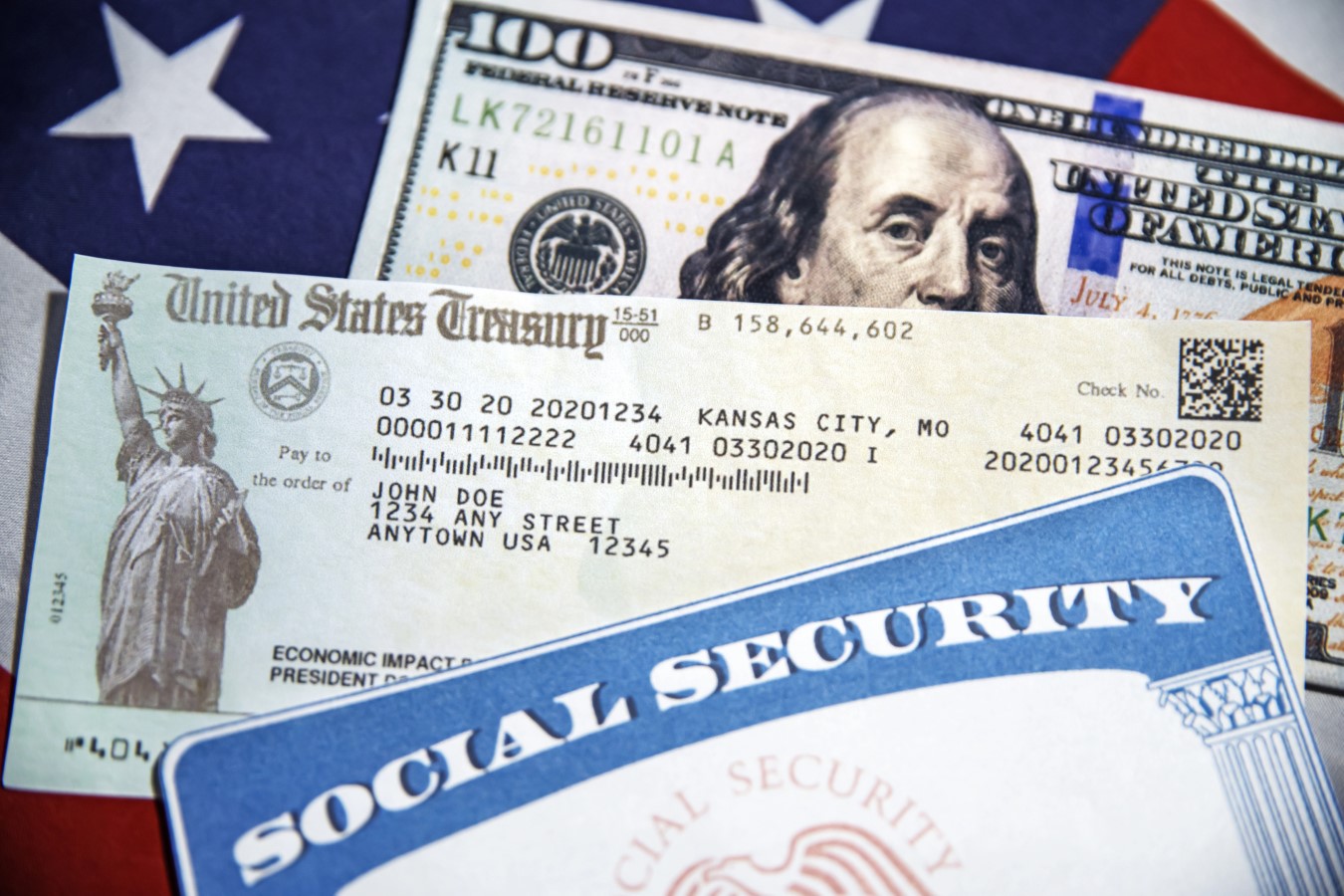
Australian superannuation has become a global benchmark for retirement stability.
Treasury Secretary Scott Bessent and U.S. officials have praised its automatic savings, universal coverage, and investment strength.
As Social Security’s long-term solvency concerns grow, the appeal of a mandatory savings model becomes harder to ignore.
Could a 12% Mandate Ever Pass in the U.S.? Experts Doubt It

Despite Trump’s praise, economists say implementing a 12% employer mandate in the U.S. would be a massive political challenge; especially for small businesses.
As one retirement expert put it: “A mandate at that level will never happen.”
Australia Has Weaknesses Too

Even fans of the Australian system acknowledge shortcomings. While superannuation ensures workers accumulate savings, it does not guarantee they will know how to spend it wisely. The system struggles with:
Longevity risk
Inflation
Decumulation planning
Cognitive decline among retirees
The U.S. suffers from the same problem: no standardized annuity or income-stream mechanism.
America Is Already Making Smaller Moves Toward Reform
SECURE 2.0 introduced automatic 401(k) enrollment and boosted catch-up contributions.
States are rolling out their own retirement programs.
And Congress is considering the Retirement Savings for Americans Act, which would expand access to tax-advantaged accounts and add federal matches for lower-income workers.
The White House Says All Options Are on the Table

When asked how an Australian-style system might work in America, White House spokesman Kush Desai said only: “The administration is closely examining all options to help Americans build wealth and achieve prosperity.”
The Bottom Line: The U.S. Needs More Than Band-Aids

Trump’s praise of Australia’s mandatory employer-funded system has injected new urgency into the debate. America’s crumbling three-legged stool; pension decline, uneven savings, and stressed Social Security, can no longer support retirees.
Whether the U.S. moves toward a superannuation-style system or simply borrows elements from it, the pressure for major reform is only growing.
Like Financial Freedom Countdown content? Be sure to follow us!
Seniors Receiving Their COLA Notices This Week Are Shocked As the 2.8% Raise Already ‘Wiped Out’ by Rising Costs

Most older Americans say the much-anticipated 2.8% Social Security cost-of-living adjustment for 2026 is already falling short. As COLA letters land in mailboxes this week, a striking 77% of Americans age 50 and over tell AARP the increase doesn’t come close to matching real inflation; and experts warn that rising Medicare premiums could wipe out what little boost retirees are getting.
Trump Accounts Just Got a $6.25 Billion Boost And Here’s How Kids Could Become Millionaires

President Trump’s signature “One Big Beautiful Bill” created tax-advantaged “Trump Accounts” to give American children an investment-powered jumpstart in life. The program just expanded dramatically after Michael and Susan Dell announced a $6.25 billion donation; a contribution large enough to fund $250 deposits for 25 million children across the country.
Trump Accounts Just Got a $6.25 Billion Boost And Here’s How Kids Could Become Millionaires
A new proposal in Congress aims to substantially increase Social Security survivor benefits for widowed individuals and surviving divorced spouses. The plan arrives as roughly 5.8 million Americans rely on survivor benefits nationwide; nearly 4 million of them widowed and many struggle under rules that reduce payouts for younger survivors or those with disabilities.
Democrats Push Major Social Security Boost for Widows; Even as Insolvency Deadline Nears

As inflation continues to strain fixed incomes, Senate Democrats have introduced a proposal to temporarily boost Social Security and veterans’ benefits by $200 per month. The plan; framed as an emergency measure, would run for six months starting in early 2026, giving retirees some extra room to manage escalating costs for groceries, medical care, utilities, and housing.
Elizabeth Warren Pushes $200 Monthly Social Security Boost as Seniors Say They’re ‘Falling Behind’

Did you find this article helpful? We’d love to hear your thoughts! Leave a comment with the box on the left-hand side of the screen and share your thoughts.
Also, do you want to stay up-to-date on our latest content?
1. Follow us by clicking the [+ Follow] button above,
2. Give the article a Thumbs Up on the top-left side of the screen.
3. And lastly, if you think this information would benefit your friends and family, don’t hesitate to share it with them!

John Dealbreuin came from a third world country to the US with only $1,000 not knowing anyone; guided by an immigrant dream. In 12 years, he achieved his retirement number.
He started Financial Freedom Countdown to help everyone think differently about their financial challenges and live their best lives. John resides in the San Francisco Bay Area enjoying nature trails and weight training.
Here are his recommended tools
Personal Capital: This is a free tool John uses to track his net worth on a regular basis and as a retirement planner. It also alerts him wrt hidden fees and has a budget tracker included.
Platforms like Yieldstreet provide investment options in art, legal, real estate, structured notes, venture capital, etc. They also have fixed-income portfolios spread across multiple asset classes with a single investment with low minimums of $10,000.